In the modern digital era, organizations generate massive volumes of information every second. Businesses collect customer records, financial transactions, operational logs, and marketing data. All this information is usually stored in databases. However, storing information alone does not create value. Real value emerges when data is extracted, processed, analyzed, and transformed into meaningful insights. This process is commonly referred to as DB to Data.
DB to Data represents the transformation of structured information stored in databases into usable datasets for analytics, reporting, machine learning, and decision-making. Companies across industries rely on this approach to understand customer behavior, optimize operations, and gain competitive advantages.
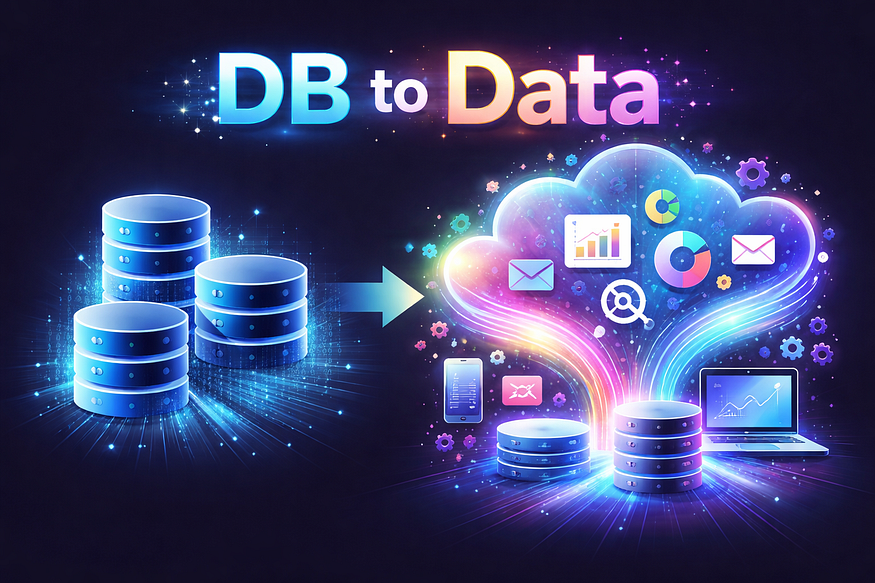
The importance of DB to Data has grown rapidly with the expansion of big data technologies, cloud computing, and business intelligence tools. Organizations that effectively convert database information into analytical datasets are able to make faster and smarter decisions.
Understanding Databases
A database is a structured collection of data that is stored electronically and managed by a database management system (DBMS). Databases are designed to store large volumes of structured information in an organized manner.
Traditional relational databases store data in tables consisting of rows and columns. Each row represents a record, while columns represent attributes of that record. For example, a customer database may contain columns such as name, email, phone number, and purchase history.
Modern systems also use NoSQL databases, which provide more flexibility for handling unstructured or semi-structured data such as JSON documents, logs, and multimedia content.
Regardless of the database type, organizations must often export or transform the stored information into other systems. This is where the concept of DB to Data becomes essential.
What is DB to Data?
DB to Data refers to the process of extracting information from databases and converting it into formats suitable for analysis, visualization, or integration with other applications.
The process generally includes several steps:
Data extraction from database systems
Data cleaning and preprocessing
Data transformation and formatting
Data storage in analytical environments
Data analysis and visualization
This transformation allows organizations to turn raw database entries into meaningful datasets that can support business intelligence, machine learning, and reporting systems.
Importance of DB to Data in Modern Business
Businesses rely on data to guide their strategies and operations. Without effective data extraction and transformation, valuable insights remain hidden inside databases.
DB to Data processes help organizations:
Identify market trends
Understand customer behavior
Improve operational efficiency
Detect anomalies or fraud
Support strategic planning
For example, an e-commerce company may store millions of transaction records in its database. By converting those records into analytical datasets, the company can identify popular products, customer purchasing patterns, and seasonal trends.
This insight helps companies make informed decisions and improve customer experiences.
Data Extraction from Databases
The first step in DB to Data workflows is data extraction. This process involves retrieving information from databases using queries or specialized tools.
Structured Query Language (SQL) is the most common method for extracting data from relational databases. SQL allows analysts to select specific records, filter conditions, and combine multiple tables through joins.
For example, a query may extract customer purchase data for a specific time period. The result can then be exported into analytical tools or data warehouses.
Data extraction can also be automated through ETL pipelines, APIs, or data integration platforms. These automated workflows enable organizations to continuously collect and update datasets for analysis.
Data Cleaning and Preparation
Raw database data often contains inconsistencies, missing values, duplicates, and formatting errors. Before analysis, this information must be cleaned and prepared.
Data cleaning includes tasks such as:
Removing duplicate records
Correcting formatting errors
Handling missing values
Standardizing units and categories
Validating data accuracy
Without proper cleaning, analytical results may be misleading or inaccurate. Therefore, data preparation is one of the most critical steps in the DB to Data pipeline.
Many organizations use data processing tools such as Python scripts, data wrangling platforms, or specialized data preparation software to automate this stage.